
DuraFlex Chimney Sweep in Cypress: A Homeowner’s Guide
DuraFlex liner is sold as a repair solution, but an improperly terminated or undersized DuraFlex install can fail a code inspection and void the product warranty, and you’d have no visual way to know from inside your home. That’s the part nobody mentions when they hand you a quote. This guide covers what DuraFlex actually is, when it’s the right call for a Cypress chimney, and what a correct installation looks like so you can check the work before you pay for it.
If you’d rather not climb on the roof to verify any of this, call (844) 656-4099. We answer 24/7, with fast dispatch from 7am to 7pm, Sunday through Friday.
What Is DuraFlex and Why Does the Corrugated Design Matter in Cypress?
DuraFlex is a flexible stainless steel chimney liner system: a corrugated tube of stainless alloy that gets pulled down an existing flue to create a new, sealed exhaust path for your fireplace or appliance. The flexibility is the point. It bends around offsets, elbows and the slight misalignments that show up in a lot of Cypress homes built in the middle of the last century, where flues were laid up by hand and rarely ran perfectly straight.
Rigid liner pipe can’t negotiate those bends. A straight stainless tube either won’t fit or has to be cut and jointed around every offset, and each seam is one more place for creosote to collect or for a connection to fail. Corrugated DuraFlex flexes through the offset as a single continuous piece. That continuity is a big part of why flexible liner has become the default retrofit choice for older masonry chimneys.
What the corrugation does cost you is a slightly rougher interior surface than smooth-wall rigid pipe, which is why correct sizing matters so much, and why some installs pair flex with a smooth-wall insert section. It also means the alloy grade and wall thickness matter. When we quote DuraFlex, we’re matching the grade to what you actually burn, wood, gas or oil, because each fuel has different temperature and corrosion demands.
How Is the Right Liner Diameter Calculated for a Cypress Home?
Liner diameter isn’t picked by eye or by whatever size is on the truck. It’s calculated from three inputs: the appliance’s BTU output, the height of the flue run from the appliance connection to the top of the chimney, and the connector rise between the appliance outlet and where the liner begins. Those numbers go into a sizing table, and the table gives you a diameter. Get the calculation wrong in either direction and you have a real problem.
- Undersized liner: the appliance can’t draft properly, smoke spills into the room, and the fire burns poorly. A wood appliance can also deposit creosote faster because the exhaust stays cooler.
- Oversized liner: the flue gases cool too much on the way up, draft weakens, and the same creosote problem shows up from the other direction.
- Height matters as much as appliance size: two identical fireplaces on different flue heights can need different liners.
- Connector rise matters too: a short rise into the liner changes the calculation.
This is exactly where low-bid work tends to fail. Someone measures the flue opening, grabs a matching size off the shelf, and skips the calculation entirely. The liner fits, so it looks fine. It just doesn’t vent correctly. Ask any contractor quoting a DuraFlex job in Cypress to show you the sizing calculation, not just the diameter they plan to install. A real chimney professional will have it.
What Does a Correct DuraFlex Termination Look Like at the Top of the Chimney?
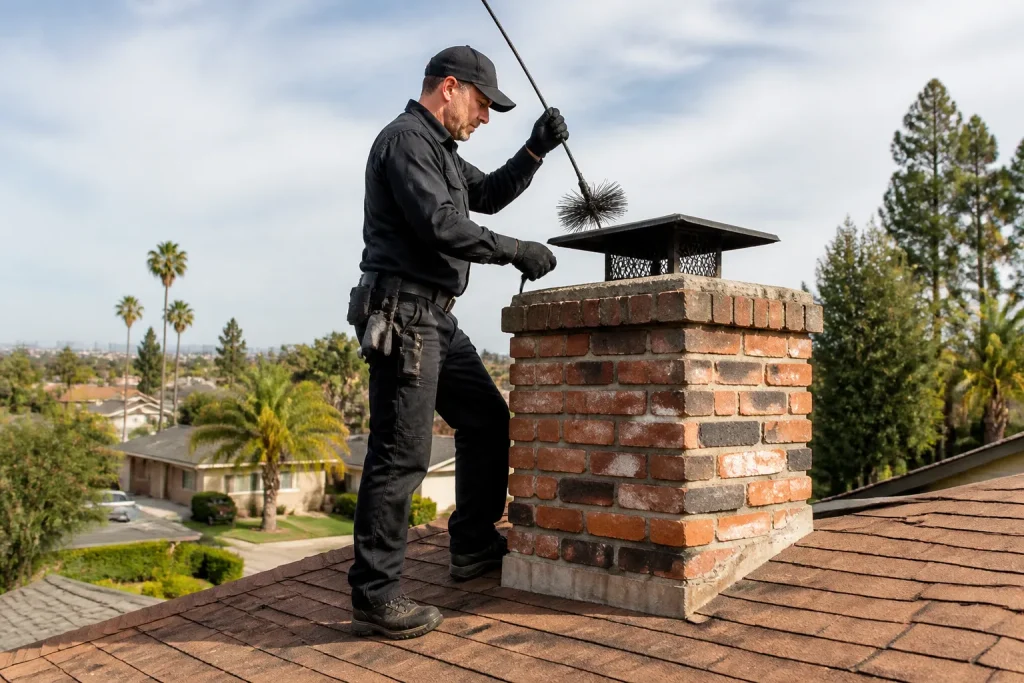
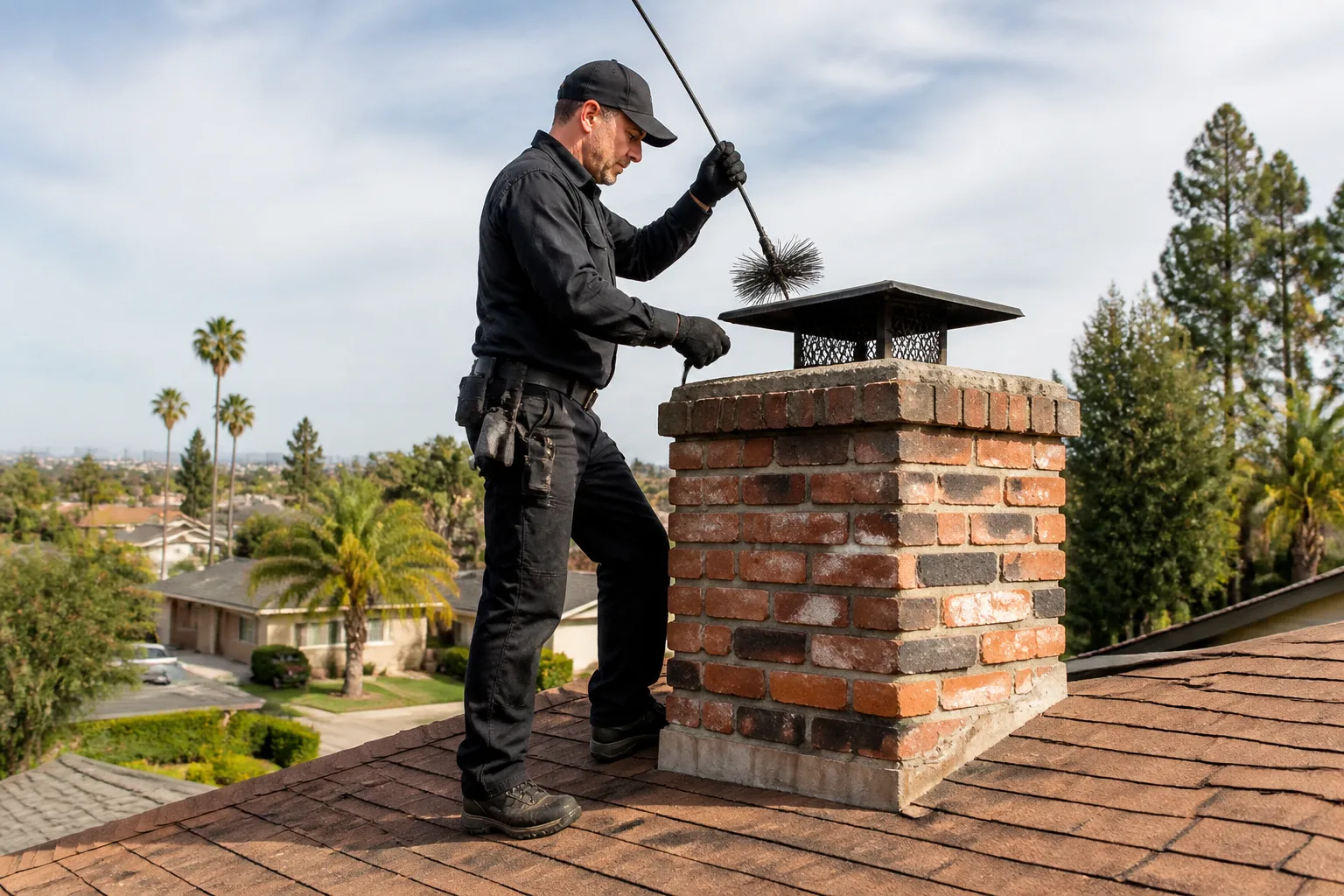
The termination is where the liner meets the top of the chimney, and it’s where a lot of DuraFlex installs quietly go wrong. Correct termination means the liner is secured to a proper top plate that seals the flue opening, the liner is trimmed and clamped in a way that keeps the connection gas-tight, and the whole assembly meets the requirements of UL 1777, the standard that governs listed chimney liners. Improper termination usually looks like one of these:
- The liner is left loose or trimmed short and simply shoved into the flue tile, with no top plate sealing the gap.
- The top plate is there but not sealed, so rainwater runs down around the outside of the liner and into the chimney structure.
- The liner projects above the crown with no proper cap or termination fitting, exposing the cut edge to weather.
- The liner is clamped with a hardware-store clamp instead of the manufacturer’s termination components.
You don’t need to diagnose any of this yourself. You do need to look. A proper job has a top plate that sits flat and seals, a termination fitting that’s part of the DuraFlex system rather than improvised, and a rain cap above it. Cap and crown work is one of the leading causes of water damage in chimneys, and a sloppy termination invites exactly that. We handle the cap and crown as part of the same project, using products from Gelco and Famco, because a good liner with a leaky top is a bad liner waiting to rust.
When Is DuraFlex the Right Choice, and When Is Rigid Liner Better?
DuraFlex is usually the right call for a retrofit, but not always. The comparison comes down to the shape of your existing flue and what you’re connecting.
- Choose DuraFlex when: the existing flue has offsets, the chimney is old hand-laid masonry with imperfect alignment, the run requires a full-length liner through a tight space, or the appliance is a wood insert or stove that needs a listed liner from the appliance to the top.
- Choose rigid liner when: the flue is straight and square to the chimney, the run is short, or you want the smoothest possible interior surface and the best draft characteristics for a high-draft appliance.
- A mix is common: flex through the offset and rigid above it, or a rigid insulated section with a flex connection at the appliance.
In our experience across Cypress, the mid-century housing stock leans toward flex, simply because those flues were rarely built dead straight. But the answer belongs to your chimney, not to a product preference. If a company tells you DuraFlex is always the answer without inspecting the flue with a camera, that tells you something about their process.
What Should a Finished DuraFlex Installation Include Before You Pay?
A finished installation should come with more than a working fireplace. Ask to see the components and the paperwork before you settle the bill. What to look for:
- Insulation wrap: a layer of insulation around the liner, where the system and your flue require it, protects the chimney from heat and improves draft by keeping exhaust warm. Ask whether it’s specified for your install and why.
- Top plate and termination: sealed, flat, and made from the manufacturer’s components, not improvised sheet metal.
- Bottom connection: a proper appliance connector or insert collar, not a friction fit.
- Documentation: the DuraFlex product label or specification sheet, and the company’s inspection report with photos of the flue before the liner went in and after it was installed.
- A visible final inspection: a camera pass down the new liner to confirm it’s clean and continuous, shown to you or included in the report.
Before paying, ask for the photos and the liner documentation. We book a sweep with a flat price agreed before we arrive, and the camera inspection and photo report are included, so you see the evidence yourself rather than taking a report on faith. If the work can safely wait, we’ll tell you that too. Nothing gets recommended without camera evidence you can look at.
When to Call a Pro
A DuraFlex installation is not a job to take on yourself. Pulling a liner down a flue is a two-person job at height, and the sizing calculation, the termination, and the UL 1777 requirements are where DIY installs fail. High roofline work and chimney interiors carry real fall and respiratory risks. Always work with a trained professional, and ask about licensing and insurance as their state requires. If your flue shows signs of damage or your liner is failing, our chimney repair team handles structural work and liner replacement together.
Related Services in Cypress
If you’re not sure whether you need a liner at all, start with a chimney sweep and inspection. For firebox and damper issues, we cover fireplace repair as well. From the firebox to the cap, we inspect it and we fix it. You can learn more about our full-system approach at Chimney Sweep Cypress.
The Bottom Line
DuraFlex is a professional-grade flexible stainless liner that belongs in a lot of Cypress chimneys, particularly older masonry flues with offsets. It only works as intended when three things are right: the diameter is calculated from appliance output, flue height and connector rise; the termination at the top is sealed and made from the manufacturer’s components; and the finished job comes with insulation, a top plate, and documentation you can review. Ask for the sizing calculation, ask to see the photos, and check that the liner carries its product label. If you’re in Cypress and need help, Chimney Sweep Cypress offers free estimates, call (844) 656-4099.
Call (844) 656-4099. We answer 24/7. Fast dispatch from 7am to 7pm, Sunday through Friday.
Frequently Asked Questions
Cost depends on the flue height, the liner diameter, the appliance, and whether insulation and a top plate are included, plus any repair work the flue needs first. We don’t quote a number over the phone, and you shouldn’t accept one sight unseen. The written estimate sets the final price, and the estimate itself is free. Call (844) 656-4099 for an exact quote.
Not every chimney needs a liner. A clay-tile flue in good condition can serve some appliances without one, depending on what you burn and how the system is set up. The only honest way to know is a camera inspection. We show you the footage and tell you plainly when work can safely wait. Call (844) 656-4099 to book an inspection.
Wood-burning chimneys are typically swept once a year, or more often if you burn heavily or burn unseasoned wood. A liner doesn’t change the sweeping schedule, and it does make cleaning easier to do properly. Gas and oil appliances have their own service needs. Call (844) 656-4099 and we’ll tell you what your system calls for.
Two things can happen. Creosote builds up inside the flue or old liner and raises the risk of a chimney fire, and defects like cracks or gaps go unnoticed until they cause smoke spillage, water damage or carbon monoxide problems. Neither shows up on the outside. A camera inspection and a documented liner install are how you close that gap. Call (844) 656-4099 for a free estimate.
Our technicians have up to 12 years of experience with flexible liner systems, resurfacing, and cap and crown work, using professional-grade materials like DuraFlex, HeatShield, Olympia Chimney, and Copperfield.
Written by the team at Chimney Sweep Cypress.
Need Chimney Cleaning Help?
Call Chimney Sweep Cypress - the local pro we connect you with is licensed and insured, with free written estimates in Cypress.
(844) 656-4099